
Showing top 0 results 0 results found
Showing top 0 results 0 results found
How to Build a Profitable SaaS Review Website in 2026: The Beginner Step-by-Step Guide to Affiliate Marketing via Product Reviews


A successful review site can generate steady, recurring affiliate income — and you can have one live in a weekend. If you’re looking to get started with affiliate marketing for beginners, building your own review website is one of the lowest-barrier, highest-potential models: you write honest, in-depth reviews, rank them on search engines, and earn commissions every time a reader signs up for a tool you recommend.
In this step-by-step guide, I’ll walk you through everything — from picking a niche and setting up your site, to writing high-quality reviews that convert, building trust with tools like LiveChat, and monetizing through programs like the Text Partner Program. Everything is beginner-friendly. No coding required.
What you’ll learn:
-
Step 2: Set up your website with a user-friendly website builder.
-
Step 3: Structure your review content for SEO and conversions.
-
Step 4: Install LiveChat or ChatBot to build trust with readers.

Building a SaaS review website from scratch sounds intimidating, but it’s easier than you think. If you’re an aspiring affiliate marketer, this kind of site is one of the quickest ways to start earning. Especially when you focus on the right niche and use tools that make the setup simple.
In this guide, I’ll walk you through every step, from picking your niche to adding features like LiveChat® for trust, writing reviews that actually convert, and setting up smart monetization through programs like the Text Partner Program. Let’s get your review site online.
Step 1: Choose the right niche
Choosing a niche is the foundation of any successful review site. Start by focusing on a SaaS category that has strong demand and good affiliate potential. Ideally, pick a niche you’re familiar with or interested in — this makes it easier to create authentic, engaging content that positions you as the go-to expert in your space.
Within the broad SaaS market (which spans everything from web hosting and ecommerce platforms to CRM systems), zero in on a specific problem area or audience need. For example, instead of covering “marketing software” in general, focus on email marketing tools for small businesses — specific enough to rank in search results, broad enough to grow with.
Identify profitable SaaS categories
Look for niches where users have buying intent and budgets. B2B software areas like SEO tools, customer service platforms, marketing automation, or ecommerce solutions attract audiences ready to make informed decisions about which tools to invest in. These categories often offer recurring affiliate commissions since they’re subscription-based SaaS products.
The Software and SaaS niche is one of the fastest-growing categories in affiliate marketing, with many high-paying programs and a consistent stream of potential customers searching for guidance. Subscription models mean you can earn ongoing revenue from each referral — which is exactly how the earnings example above compounds over time.
Make sure your chosen niche isn’t too broad (heavy competition) or too narrow (limits your audience). Aim for a sweet spot where you can establish yourself as a trustworthy business resource.
Before committing, do a quick validation: search Google and see what types of review content already exist in that niche. If people are actively searching for “best CRM for freelancers” or “top project management tools for startups,” that’s a healthy niche with real user demand.
Targeting long-tail keywords (specific phrases that real users search in search engines) will help you rank more easily and attract qualified readers. The right niche will connect you with an audience that needs solutions and is willing to pay for them.
Looking for a beneficial partnership?
Join our Partner Program to unlock a new revenue stream and stand out from the competition.
Step 2: Set up your website with a user-friendly website builder
With your niche in mind, it’s time to handle website creation. As a beginner, you’ll want a user-friendly website builder or CMS that supports easy integration of live chat tools and has all the essential features a review blog needs — fast loading times, responsive design, and flexible page layouts.
Popular choices include WordPress, Wix, and Webflow. The good news is that LiveChat offers integrations for all of these. LiveChat is fully compatible with WordPress (there’s an official plugin) and works with top page builders like Elementor or Divi, so you can add a chat widget with no coding required. If you prefer a hosted builder like Wix or Webflow, LiveChat has apps in their marketplaces that connect chat in just a few clicks.
Choose a platform that fits your comfort level
WordPress is ideal if you want maximum flexibility and search engine optimization control. Install the LiveChat plugin and have chat running in minutes. Wix is a better fit if you want a drag-and-drop experience — add LiveChat via the Wix App Market. Webflow suits design-focused builders and integrates LiveChat directly within its interface.
When setting up your site, pick a clean, fast theme. Slow loading times kill both user satisfaction and search rankings, so speed should be a priority from day one. Create your essential pages: Home, About, Contact page, and a Reviews index. Set up your category pages by software type (Marketing, Sales, Customer Support) to help visitors navigate and to signal to search engines how your content is organized.
Set up basic SEO settings — a clear site title, meta descriptions, and keyword-rich URLs (e.g. yourdomain.com/reviews/product-name). With responsive design in place and LiveChat installed from the start, your site will feel professional and credible before you’ve published your first review.
Must-have review functionality from day one
Most review sites need a few pieces of review functionality beyond a standard blog setup. Consider adding a star-rating system, comparison tables for product categories, and structured review layouts that are easy to skim. These features improve user engagement, help guide readers toward a decision, and signal to search engines that your content is well-organized and purposeful.
Step 3: Structure your review content for SEO and conversions
High-quality content is what attracts readers and search engines alike. Most review sites fail not because they lack traffic, but because their content doesn’t actually help the reader make a decision. Here’s how to structure every review for both search engine optimization and real-world conversion.
Headline and intro: Include the product name and a keyword like “review” or a primary benefit. In the opening paragraph, give a short, honest summary of who the product is best for — and who it might not suit. This sets user expectations immediately and signals that you’re objective.
Your experience (body): Share specific findings from hands-on testing of the product. Details like “the dashboard has a learning curve in the first week” or “their support team responded in under three minutes” make your review authentic. Readers want to know what it’s actually like to use the SaaS — not the marketing copy from the company’s own site. Personal recommendations grounded in real experience are what separate good review blogs from thin affiliate pages.
Features and benefits: Break down the key features — but explain how they help the user, not just what they are. Naturally incorporate relevant keywords where they fit (e.g. “email automation,” “newsletter templates”). Avoid overloading this section with jargon; the goal is to help a potential customer understand the value quickly.
Pros and cons: Include both. Balanced, high-quality reviews convert better because readers trust that you’re not hiding the negatives. Users also actively search “[Product] pros and cons,” so this section can capture that intent directly.
Comparisons: Add a “[Product] vs [Competitor]” section with comparison tables where relevant. Most review sites that rank well include comparison content — it’s how readers who are actively evaluating options find their way to a decision.
Conclusion and CTA: State clearly who you’d recommend the product for. End with a visible call-to-action with your affiliate link — something like “Try [Product] free for 14 days here.” Make the CTA specific and benefit-led.
Formatting and SEO tips
Use headings (H2, H3) for each section. Keep paragraphs to 2–4 sentences and use lists or comparison tables to break up text and improve user engagement. Add multimedia elements like screenshots of the software in action, short video walkthroughs, or annotated images — these improve content quality and time-on-page. Always add descriptive alt text to images for accessibility and search engine optimization.
Write for the reader first. But do keyword research for each review: what would a potential customer search when evaluating this tool? Adding a short FAQ at the end of each review targeting questions like “Is [Product] worth it?” and “[Product] pricing” helps you rank for long-tail searches and capture featured snippets in search results.
Maintain consistency across all your reviews — same structure, same tone, same depth. Readers who enjoy one review and find another formatted completely differently are less likely to trust the site as an authority. Consistency is one of the most underrated factors in building a successful review site.
A note on review integrity
All the reviews you publish should reflect genuine assessment. Fake reviews — whether falsely positive or artificially negative — destroy credibility and, increasingly, violate platform guidelines and advertising regulations. Google reviews and third-party platforms are getting better at detecting manipulated content, and your long-term business model depends entirely on readers trusting your judgment. Verified reviews, grounded in real hands-on testing, are your most valuable asset.
Looking for a beneficial partnership?
Join our Partner Program to unlock a new revenue stream and stand out from the competition.
Step 4: Install LiveChat or ChatBot to build trust with readers
One often overlooked element in review sites is enhancing user engagement through direct interaction. By adding a live chat (like LiveChat) or an AI chatbot (like ChatBot) to your website, you can significantly boost social proof and visitor trust.
When readers land on your site and see they can instantly ask a question via chat, it signals that there’s a real, helpful presence behind the content. This sets your review site apart as more credible than most review sites that are just static pages with affiliate links and nothing more.
Installing LiveChat allows you to offer real-time help. If a visitor is unsure about something in your review (“Is this tool suitable for freelancers?”), they can ask directly. Prompt, helpful responses turn casual readers into loyal followers and drive the kind of user satisfaction that brings people back. Even if you’re not online 24/7, ChatBot’s automation can handle FAQs and greet visitors proactively.
Think of it the same way a phone number on an ecommerce site makes you more confident placing an order — many visitors will never use the chat, but the fact it’s there signals a trustworthy business. It also generates valuable user input: the questions visitors ask in chat are direct windows into what your content is missing.
User feedback from chat conversations can inform your content creation roadmap. If five visitors ask the same question about pricing that your review doesn’t cover well, that’s a clear signal to improve that section. The best review blogs treat chat not just as a trust signal but as a continuous feedback loop.
A chatbot can also be configured to guide readers toward relevant content — directing someone asking about CRM tools to your CRM comparison page, for example. This improves user engagement metrics and increases the likelihood that a visitor finds the review they need and converts.
Since you already picked a LiveChat-compatible platform in Step 2, installation is straightforward. Customize the widget’s color, avatar, and greeting message to match your site and maintain consistency with your brand.
Looking for a beneficial partnership?
Join our Partner Program to unlock a new revenue stream and stand out from the competition.
Step 5: Monetization — join the right affiliate programs
A review site becomes a business when you start monetizing it. There are several ways to generate revenue from a product review website — affiliate programs, sponsored posts, display advertising via Google AdSense, and building a business directory of local services — but for most SaaS review blogs, affiliate programs are the highest-leverage starting point.
One of the first programs you should join is the Text Partner Program. Here’s a concrete breakdown of what the commissions look like in practice:
Real earnings example — 10 referred customers on a $49/month LiveChat plan:
-
Commission per customer per month: $9.80
-
10 referrals combined: $98/month
-
After 6 months (no churn): $588
-
After 12 months (no churn): $1,176
Grow to 50 referrals and that’s approximately $5,880 annually — recurring, from one program.
Why the Text Partner Program?
The Text Partner Program lets you promote LiveChat, ChatBot, and HelpDesk — a product suite used by 35,000+ companies worldwide. Here’s what makes it stand out:
-
20% recurring lifetime commission, increasing to 22% after just 5 referrals
-
120-day cookie window — meaning someone who clicks your link today can convert up to 4 months later and you still get credit
-
Two-tier system — earn 5% of sales from any affiliates you refer, for life
-
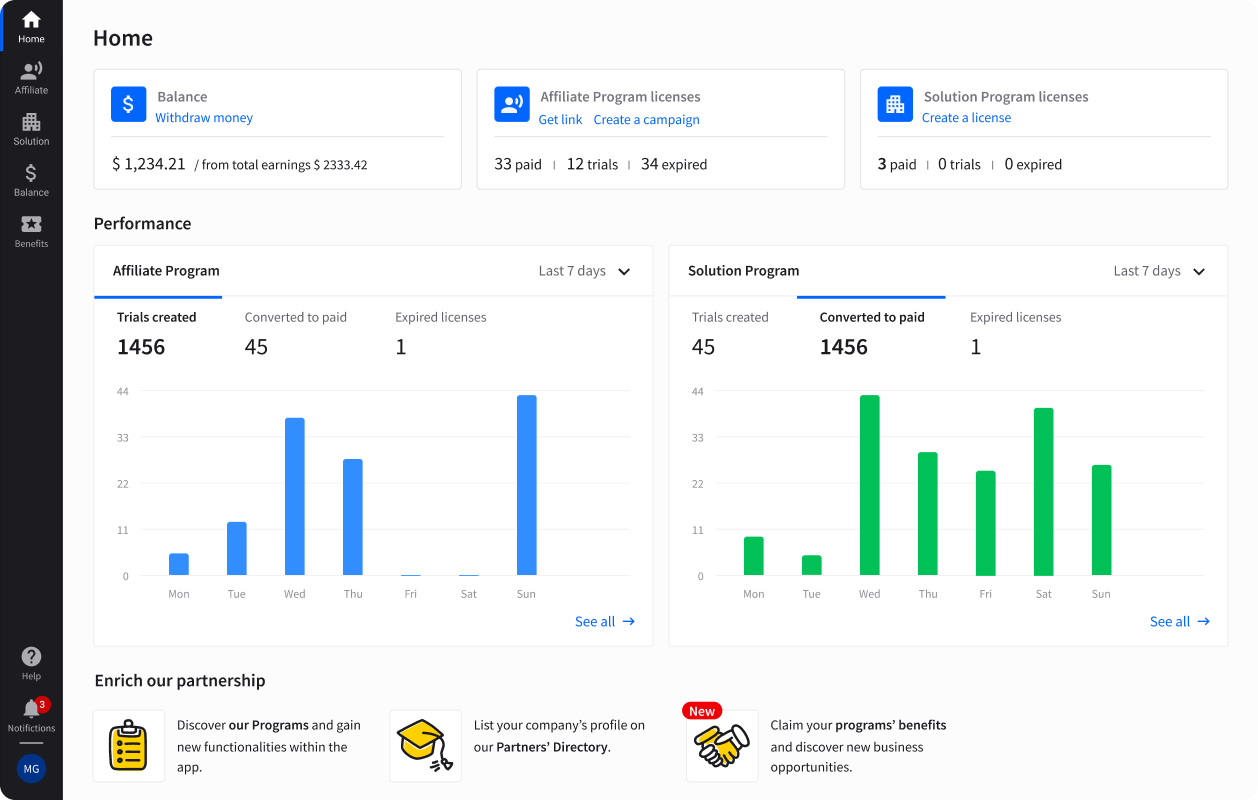
Full marketing asset library — banners, product images, pre-written copy, and a campaign builder to help you generate revenue faster
-
Real-time analytics dashboard to track performance metrics including clicks and conversions
-
Reliable recurring income — not capped at 12 months like many competing programs
How does it compare to other SaaS affiliate programs?
| Program | Commission | Cookie Window | Commission Type | Two-tier? |
|---|---|---|---|---|
| Text Partner Program ⭐ | 20% → 22% | 120 days | Recurring, lifetime | Yes (5%) |
| HubSpot | 30% (capped) | 90 days | Recurring, 12 months | No |
| Semrush | $200/sale | 120 days | One-time | No |
| Pipedrive | 20% | 90 days | Recurring, 12 months | No |
| Freshworks | 15% | 90 days | Recurring, 12 months | No |
The key differentiator is the lifetime recurring model. HubSpot and Pipedrive both cut commissions after 12 months. Text keeps paying as long as the customer stays subscribed.
Other monetization options
Beyond affiliate commissions, a product review website can generate revenue through several additional channels:
Google AdSense — Display advertising is passive income once your traffic grows, though it pays less per visitor than affiliate commissions. It works best as a supplement once you have consistent traffic, not as a primary revenue driver early on.
Sponsored posts — Brands in your niche may pay for reviewed coverage or sponsored content. This can be lucrative, but be careful: clearly labeling sponsored posts is both a legal requirement and essential to maintaining the reader trust your site depends on. Most review sites that lean too heavily on sponsored content lose credibility over time.
Free product samples — Many SaaS companies will offer extended trials or full access in exchange for an honest review. This gives you the hands-on testing access you need to write genuinely useful content. Reach out to companies directly once your site has a few published reviews.
Business directory — If your niche includes local businesses or local services, adding a business directory with verified reviews can attract highly local search traffic and additional advertising revenue from listed businesses.
Monetization game plan
Sign up for affiliate programs before you have significant traffic — don’t wait. The 120-day cookie window on Text’s program means early links can still convert months later. Always disclose affiliate links clearly. Incorporate them naturally in your content: “You can try [ToolName] with a free 14-day trial here” converts better than a blunt “buy here.”
Avoid overloading pages with too many links. A few well-placed links and one prominent CTA button typically outperform a dozen scattered text links. Your goal is to guide readers toward a decision, not overwhelm them with options.
Looking for a beneficial partnership?
Join our Partner Program to unlock a new revenue stream and stand out from the competition.
Step 6: Drive traffic to your review site
With your content and monetization in place, you need visitors. Traffic for a review blog comes from two main sources: search engines (organic, free, long-term) and active promotion (social, communities, email). The best strategy combines both.
Search engine optimization (SEO)
Search engine optimization is the backbone of a product review website. Most review sites that generate consistent passive income get the majority of their traffic from organic search — readers actively looking for guidance before making a purchase.
Focus on long-tail keywords that match what your readers are actually searching. Ranking for “CRM” is unrealistic — but “best CRM for freelance designers” or “affordable CRM for startups” is achievable with high-quality content. Each review or post should target a clear primary keyword ("[Product] review," “Top 5 [Category] tools,” “How to use [Product] for X”).
Optimize meta titles and descriptions to include those keywords and a reason to click. Over time, as you publish quality content, you’ll start appearing in search results for more keywords and building steady organic traffic. SEO is a long game, but once you rank, the traffic is free and self-sustaining.
Content marketing and repurposing
Don’t just publish and wait. Repurpose each review into multiple formats: a YouTube video summary, a LinkedIn post with your top three findings, a Twitter/X thread, or a Quora answer linking back to your full review. One piece of content creation can reach audiences across five or six platforms without rebuilding from scratch.
Automated tools for social scheduling (Buffer, Hootsuite) can help you distribute content consistently without manual effort every day. The goal is to reach your audience wherever they consume content — and use each platform to funnel them back to your review site.
Social media presence
Choose one or two channels where your target audience hangs out and be consistent. For SaaS and business tools, LinkedIn and Twitter/X are strong options. Share snippets, quick tips, comparison insights, and industry news — always with a subtle call-to-action to read more on your site. Consistency matters more than volume.
Community engagement
Participate in forums and Q&A communities in your niche — subreddits like r/marketing or r/SaaS, Quora, or relevant Slack and Facebook groups. Provide genuinely useful answers and only link to your site when directly relevant. Allowing users to discover your content naturally through helpful contributions builds far more durable traffic than spamming links.
Email marketing
As your site gains visitors, start building an email list. Offer a newsletter or a free resource (e.g. a PDF checklist: “10 Questions to Ask Before Choosing a CRM”). Email is a direct line to people who already trust your content — and when you publish a new review, you can drive immediate traffic rather than waiting for search engines to index it. Even a few hundred engaged subscribers can be a reliable traffic base. Keep emails helpful and infrequent — once a week or biweekly is plenty.
Review local businesses and services
If your niche includes local services or local businesses, targeting location-based queries can be a fast path to early traffic. Queries like “best [software type] for small businesses in [city]” or “top [category] tools for [industry]” can have lower competition than generic national keywords and attract highly motivated readers. Some of the most successful review sites in local niches review local businesses alongside software tools, building a hybrid audience.
Looking for a beneficial partnership?
Join our Partner Program to unlock a new revenue stream and stand out from the competition.
Step 7: Growth and optimization tips
Once your site is live, shift from setup mode to growth mode. Here are the most important next steps for turning a new review blog into a reliable income source.
Analyze and optimize
Regularly review your performance metrics using affiliate dashboards and Google Analytics. Track which pages generate the most traffic, which links convert, and which traffic sources (SEO, email, social) are driving actual revenue. Test different CTA wording and placement — small changes in how you present affiliate links can meaningfully improve conversion rates.
Performance testing doesn’t have to be complex. Even manually comparing two versions of a review introduction over a month can reveal which approach better meets user expectations and drives more clicks.
Keep content fresh and frequent
SaaS products change fast — new features, pricing changes, new competitors. Update your existing reviews every few months and add an “Updated for 2026” note in the title. Google rewards updated, high-quality content and readers trust current information.
As you add more reviews, interlink them. Internal links help search engine optimization and keep readers on your site longer, increasing the chance they’ll find and click an affiliate link.
Aim to publish new content regularly. Every new review is a new entry point from search engines, a new asset that can gather user feedback, and a new opportunity to generate revenue. Slow and steady publishing beats irregular bursts of activity every time.
Scale your reach carefully
Once you have a foundation, consider outsourcing some content creation or bringing in guest contributors. Expand into adjacent product categories — if you started with marketing software reviews, you might branch into sales or customer support tools naturally.
Use automated tools for repetitive tasks: social scheduling, email drip campaigns for new subscribers, and performance monitoring. These free you up to focus on high-leverage work like in-depth reviews and relationship-building with SaaS companies.
Build trust signals across the site
As your site grows, invest in signals that reinforce you as a trustworthy business. This includes displaying verified reviews from readers who have followed your recommendations, adding social proof like subscriber counts or reader testimonials, publishing a transparent “How I review products” page, and keeping a visible contact page so readers know a real person is behind the content.
The best review blogs actively gather feedback from their audience — through comment sections, chat conversations, or periodic email surveys. Providing valuable feedback and acting on it is what separates a site that plateaus from one that keeps growing. When you ask readers what they need, they’ll tell you — and the resulting content will consistently outperform content created in isolation.
Patience and consistency
Growing an affiliate site is a marathon. It may take a few months to see significant traffic. Consistency is your best friend — publish regularly, engage with your audience, and keep improving. After 3–6 months of consistent effort, you’ll typically see search rankings climbing, traffic compounding, and commissions starting to stack. That’s when the passive income model really clicks.
Conclusion
Building a product review website for affiliate marketing is a journey of learning and iterating. You now have the full step-by-step guide: choose a niche, build a site with the right website builder and essential features, write high-quality reviews structured for search engines and conversions, install LiveChat for trust and user engagement, join the right affiliate programs, and drive traffic through smart, consistent promotion.
Think of your own review website as a business asset, not just a blog. Every in-depth review you publish is a recurring revenue opportunity. Every satisfied reader who follows a personal recommendation and signs up for a tool is a commission that can pay you month after month. The sooner you join programs like the Text Partner Program and get your links in place, the sooner those commissions start compounding.
Start with your first review. Pick the tool you know best in your niche and write the review you wish existed when you were evaluating it. Keep the tone honest and beginner-friendly. Put your readers’ needs — and their ability to make informed decisions — above everything else. The monetization will follow.
Join the Text Partner Program** — free, 2 minutes. Start earning 20% recurring commissions on LiveChat, ChatBot, and HelpDesk referrals.**
FAQ
How much can I realistically earn from a review website?
It depends on your traffic and niche, but the recurring commission model is very favorable over time. Even 10 referred customers on a $49/month plan at 20% commission generates $98/month — $1,176/year. Many full-time affiliate marketers earn $3,000–$10,000/month from a single niche site, typically 12–24 months after starting.
Do I need existing traffic to join the Text Partner Program?
No — you can join even if your site is brand new. It’s free to sign up and there’s no minimum traffic requirement. Joining early means your affiliate links are ready the moment you publish your first review.
Is affiliate marketing for beginners actually viable in 2026?
Yes. A product review website is one of the most beginner-accessible affiliate models. You don’t need to create a product, handle inventory, or run paid ads. You write high-quality reviews, optimize them for search engines, and earn when readers sign up. The SaaS market keeps growing as businesses adopt more software tools, and recurring commission structures mean your income compounds as you build.
How long until I see my first affiliate commission?
Most beginners see their first commission within 2–4 months of website launch, assuming consistent content publishing and basic search engine optimization. The 120-day cookie window on the Text Partner Program helps significantly here — a reader who clicks your link in month two can convert in month five and you still get credit.
Do I need to disclose affiliate links?
Yes — and you should want to. Clear disclosure is legally required in most jurisdictions (FTC guidelines in the US, ASA in the UK) and builds reader trust. Readers who understand you may earn a commission but trust your judgment are more likely to convert than readers who feel misled.
What’s the difference between one-time and recurring commissions?
A one-time commission pays a flat fee when someone signs up. A recurring commission pays a percentage every month the customer stays subscribed. Recurring is almost always better long-term — a 20% recurring commission on a $49/month tool pays $9.80 every month indefinitely. The Text Partner Program uses a lifetime recurring model, which is what makes the compounding earnings example at the top of this article realistic.
How do I avoid fake reviews hurting my site’s credibility?
Never fabricate or buy online reviews, positive or negative. Google and other search engines are increasingly effective at identifying manipulated review content, and the penalties — both in rankings and in reader trust — are severe. Only publish verified reviews based on genuine hands-on testing. If you’re reviewing a product you haven’t used personally, be transparent about your research methodology.


