
Showing top 0 results 0 results found
Showing top 0 results 0 results found


Thinking about affiliate marketing but not sure it’s worth your time?
Good. That’s the right question to ask before you start. The global affiliate marketing industry is worth billions, and it’s still one of the most accessible ways to build an online business. And yet plenty of people start, stall, and quit within three months.
Here’s the thing. The difference between the two groups usually isn’t talent. Successful affiliates understand the trade-offs going in, and they choose affiliate programs designed to offset the model’s biggest weaknesses.
This guide walks you through the pros and cons of real affiliate marketing. No hype, no guru math. Just an honest look at how affiliate marketing works, where it falls short, and what to check before you join one affiliate marketing program over another.
What is affiliate marketing, and how does it work
Affiliate marketing is performance-based marketing. You promote products from a company using a unique affiliate link, and you earn money whenever someone you referred buys, signs up, or completes another qualified action.
The whole business model runs on revenue sharing. The company gets new customers it wouldn’t have reached on its own. You, the affiliate publisher, get a cut for making the introduction. No inventory. No need to create products. No customer support on your plate.
That simplicity is exactly why the affiliate marketing industry keeps growing, and why so many bloggers, YouTubers, and social media influencers treat it as their main income stream.
Is affiliate marketing legit
Yes. Affiliate marketing is a legitimate, widely used marketing strategy. Major retailers, software companies, and publishers all run affiliate programs, and affiliate relationships are regulated in most markets (in the US, by the FTC).
So where does the skepticism come from? Two places, mostly.
-
Get-rich-quick gurus. Courses promising “$10k in 30 days” have given the industry a scammy aftertaste. The business model is real. The overnight-riches version of it is not. Most successful affiliates need 6 to 12 months of consistent work before their affiliate income becomes meaningful.
-
Low-quality programs. Some programs hide their terms, run short cookie windows, delay payouts, or quietly change commission structures. That’s not a flaw of affiliate marketing. It’s a flaw of those specific programs, and it’s exactly why your program choice matters as much as your content.
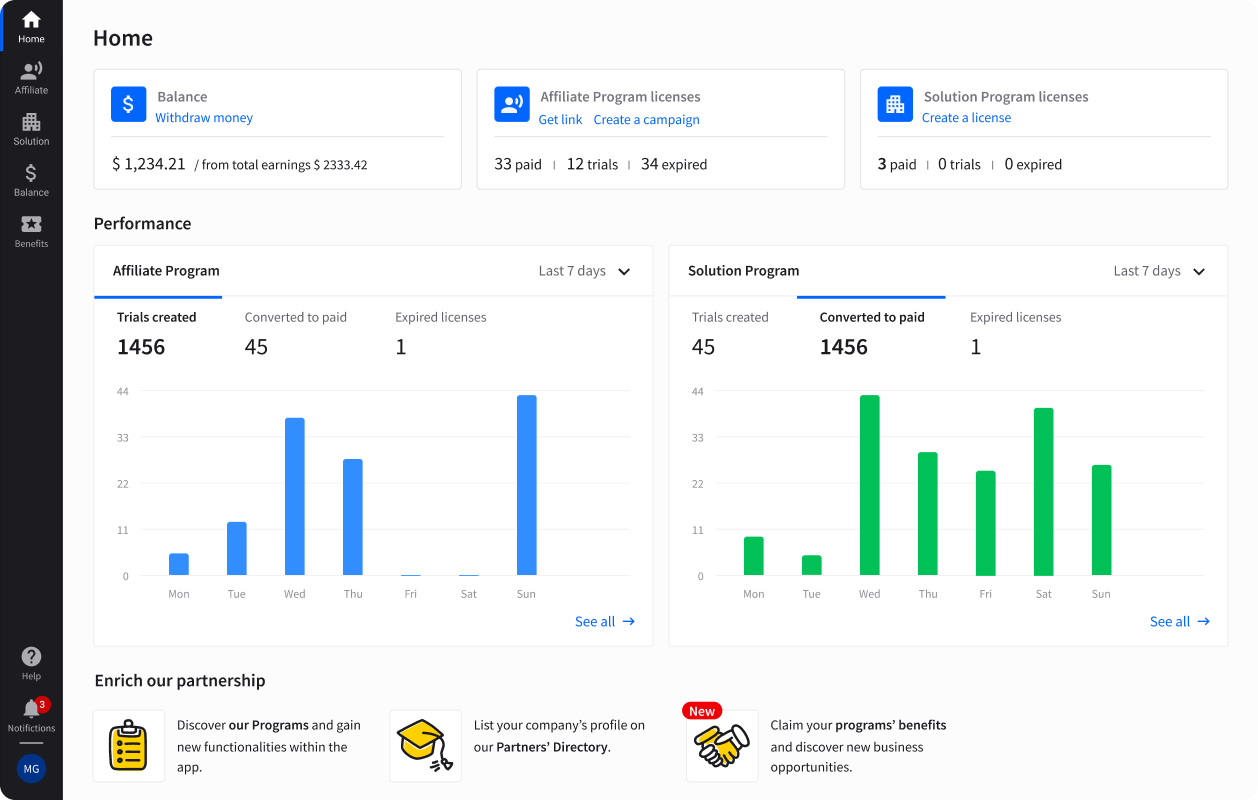
A legitimate program looks like this: published commission terms, real-time tracking you can verify yourself, a product with a visible customer base, and payouts on a predictable schedule. For reference, the Text Partner Program publishes everything upfront: 20% lifetime recurring commission on products trusted by 30,000+ businesses in 150+ countries, a 120-day cookie window, and performance tracked live in the Partner App.
How to start affiliate marketing in five steps
Want the short version of how to become an affiliate marketer? Here it is.
-
Pick a niche you can credibly talk about. Your chosen niche should match real expertise or genuine interest. If you write about ecommerce or online business, communication tools like live chat software are a natural fit.
-
Find affiliate programs worth your effort. Prioritize recurring commissions, transparent terms, and affiliate products with proven demand. This one decision determines whether half the cons of affiliate marketing apply to you at all.
-
Build your platform. A blog, a YouTube channel, a newsletter, or social media platforms. You can even start without a website.
-
Create content that helps first and promotes second. Reviews, comparisons, and tutorials generate sales far better than banner-blasting. Valuable content builds trust. Trust drives traffic that converts.
-
Track and optimize. Double down on marketing tactics that work, cut what doesn’t. A good program gives you real-time data for this. In the Text Partner Program, that’s the Partner App dashboard.
See what a transparent affiliate program looks like
Free to join. No website required. Two-minute signup.
The pros of affiliate marketing
Almost zero startup costs
A laptop and an internet connection. Optionally, a domain and hosting. That’s the full startup budget for an affiliate business, which is why low startup costs sit at the top of every affiliate marketing pros list ever written. Compare that with any other online business and the gap is hard to ignore.
No expertise required on day one
You learn by doing. Test content formats, test marketing channels, repeat what works. Any prior experience with writing, video, or community building gives you a head start, but none of it is mandatory.
It fits around your day job
Affiliate marketing works as a nights-and-weekends project. Give it six months alongside your current job and let the results tell you whether to scale up. There’s no penalty for starting small, and no boss to convince.
Recurring income that compounds
Can you earn passive income with affiliate marketing? Partly, and the “partly” depends entirely on your program.
With one-off commissions, you’re paid once per referral and the meter resets. With recurring commissions, every customer you refer keeps paying you for as long as they stay subscribed. That’s the difference between renting your traffic and building an asset.
Here’s an example math with a 20% lifetime commission on a $100/month subscription:
| Referrals you make | Monthly income after 6 months | After 12 months | After 24 months |
|---|---|---|---|
| 2 per month | $240/mo | $480/mo | $960/mo |
| 5 per month | $600/mo | $1,200/mo | $2,400/mo |
| 10 per month | $1,200/mo | $2,400/mo | $4,800/mo |
The math assumes customers stay subscribed. In the Text Partner Program, the average customer stays around three years, so the work you did in month one is still paying you in month thirty.
Total flexibility
Your hours. Your location. Your methods. No reports to file, no dress code, no one approving your Tuesday afternoon errand. As an independent promoter, you answer to your own results and nothing else.
Customer service isn’t your problem
Post-sale questions, refunds, support tickets? All the merchant’s job. Your only obligation is the one that benefits you anyway: replying to comments under your own content, which builds trust and engagement.
Marketing materials are handed to you
Reputable programs supply promotional materials like banners, copy, product visuals, and pre-written content, so you focus on distribution and your own voice instead of design work. Text partners get a ready-made promo library in the Partner App from day one, plus a campaign builder for custom tracked links.
Unlimited channels, unlimited ceiling
Blog posts. YouTube reviews. Email marketing. Paid ads and pay-per-click campaigns. Quora answers. Or all of them combined across multiple platforms.
You can also promote products from several complementary programs at once and diversify your income. If one underperforms, drop it. You’re never locked in.
And one more thing worth knowing: many affiliates assume programs restrict how you can advertise. The Text Partner Program doesn’t impose strict marketing restrictions like keyword bidding limits, so social media advertising, search ads, and content all stay on the table.
Earn 20% of every payment, every month, for the customer's lifetime
The average customer stays around three years. Refer once, get paid on repeat.
The cons of affiliate marketing (and how to neutralize each one)
Honesty time. These drawbacks are real. But notice how many of them are really drawbacks of bad program selection, not of the business model itself.
You don’t make the rules
The merchant does. If a program cuts its commission rate or shortens its cookie policy, you can voice concerns, but you can’t overrule them.
- How to neutralize it: Before joining, check whether the program publishes its terms openly and has a track record of stability. Then diversify across two or three complementary programs so no single rule change can sink your income.
High competition in popular niches
Low barriers to entry cut both ways. Anyone can join, so popular niches fill up with many affiliates chasing the same audience. A fitness influencer competing for “best protein powder” is up against thousands of identical reviews.
- How to neutralize it: Skip the most saturated arenas and pick a defined B2B or SaaS niche. Customer service and business communication software has far fewer affiliates competing for the same keywords than fitness or finance, and the buyers are other businesses with real budgets. Bonus for 2026: while everyone is promoting generic AI tools, you can promote AI that actually does something, like ChatBot handling customer conversations that end in sales.
The customers aren’t yours
Once you make a referral, repeat purchases happen directly between the customer and the merchant. With one-off commission programs, that means permanently hunting for new customers just to stand still.
- How to neutralize it: This is the single best argument for recurring-commission SaaS programs. When the commission recurs, you don’t need to “own” the customer. You keep earning from them anyway. In the Text Partner Program, the 20% commission arrives with every payment the customer makes, for as long as their subscription stays active. With a three-year average customer lifetime, one referral isn’t one payday. It’s roughly thirty-six.
No guaranteed income
Performance-based pay means exactly that. No performance, no pay. Nobody can promise you a number, and the early months are usually slow.
- How to neutralize it: Treat the first 6 to 12 months as an investment phase and keep your day job. Choose recurring commissions so every win compounds instead of evaporating. Your income floor rises with each referral instead of resetting to zero every month.
Working solo isn’t for everyone
Isolation and motivation dips are real. Some people thrive on independence. Others quietly burn out.
- How to neutralize it: Build structure deliberately. A coworking desk, a regular café, an affiliate community or two. And test affiliate marketing as a side project before making it your livelihood.
Spammy affiliates damaged the model’s reputation
False advertising, false claims, link-stuffed garbage content. It works briefly, then credibility collapses, and merchant relationships collapse with it.
- How to neutralize it: Don’t compete with spammers. Outlast them. Honest reviews and relevant content rank better, convert better, and keep you welcome in the best programs. Be legit and act legit. It’s also just better business strategy.
Link hijacking happens (rarely)
Fraudsters occasionally hijack affiliate links to steal commissions. It’s uncommon, but recovering a stolen commission is nearly impossible.
- How to neutralize it: Use link cloaking tools, join programs with solid tracking infrastructure, and watch your dashboard for anomalies. Yet another reason real-time reporting matters.
So, is affiliate marketing worth it
For most people willing to invest 6 to 12 months of consistent content creation: yes. The startup cost is negligible, the downside is limited to your time, and the upside compounds in a way few side hustles can match. Especially with recurring commissions.
The honest summary of the affiliate marketing pros and cons comes down to this: the advantages are built into the model, and most of the disadvantages are built into bad programs. Which means your most important decision isn’t your logo, your domain, or your content calendar. It’s the program you choose first.
A checklist worth keeping:
-
✅ Recurring commissions, so referrals compound instead of resetting
-
✅ A product with proven demand, easier to promote and lower refund risk
-
✅ Transparent, published terms, no surprise rule changes
-
✅ A long cookie window, so late converters still count
-
✅ Real-time tracking, so you can verify and optimize
-
✅ Ready-made promo materials, so you start fast
The Text Partner Program checks all six. A 20% lifetime recurring commission that rises to 22% after 5 paying customers. LiveChat, ChatBot, and HelpDesk, trusted by 30,000+ businesses worldwide. Terms published upfront. A 120-day cookie window. The Partner app for live tracking. A complete promo kit from day one. Plus a second-tier commission: refer another partner and you earn 5% of their sales for life.
And don’t just take our word for it. As one affiliate partner put it on the Partner Program blog: “In this partnership, I was looking for new streams of revenue. A great thing is that I also found lots of co-marketing opportunities and amazing support.”
💡 CTA BOX 3 — placement: conclusion (direct, decision-stage)
Ready to start on the right foot?
Join the Text Partner Program free and earn 20% recurring commission on every customer you refer, for as long as they stay.
[Join free in two minutes →]
No website required · no traffic minimums · 120-day cookie window
Ready to start on the right foot?
Join the Text Partner Program free and earn 20% recurring commission on every customer.
FAQ
Is affiliate marketing legit?
Yes. It’s a standard, regulated marketing model used by major brands worldwide. The scams associated with it are almost always overpriced guru courses or shady individual programs, not the model itself.
Is affiliate marketing worth it in 2026?
Yes, if you treat it as a 6 to 12 month project rather than a quick win. Recurring-commission SaaS programs in particular reward patience, because income compounds with every referral.
Can affiliate marketing be passive income?
Partially. Building the audience and the content is active work. But with recurring commissions, the income from past referrals keeps arriving with no extra effort. That part is genuinely passive.
Do I need a website to start affiliate marketing?
No. YouTube, newsletters, social media, and communities all work. A website helps long-term, but it’s not a prerequisite.
How much can affiliate marketers earn?
It depends on your traffic, niche, and program. As a benchmark: with a 20% recurring commission on a $100/month product, referring 5 customers a month puts you at around $1,200/month in recurring income after one year. And in the Text Partner Program, your rate rises to 22% on new licenses once you pass 5 paying customers.